
Introduction
Does it ever feel like there simply are not enough hours in the day? Between work responsibilities, family commitments, personal goals, and daily tasks, many women struggle to maintain a healthy routine. Achieving work-life balance for women can seem impossible when everyone needs your time and attention.
The good news is that work-life balance for women is not about doing everything perfectly. Instead, it is about creating realistic habits that allow you to succeed professionally while protecting your physical and mental well-being. Whether you’re building a career, raising a family, pursuing education, or managing multiple responsibilities, finding balance is possible.
In this guide, you’ll discover practical strategies that can help improve work-life balance for women, reduce stress, avoid burnout, and create a healthier, happier life.
1. Set Clear Boundaries Between Work and Personal Life
One of the most effective work-life balance tips for women is learning how to establish healthy boundaries.
Many women stay connected to work long after office hours end. Checking emails late at night or responding to messages during personal time can quickly lead to exhaustion.
Try these simple boundary-setting habits:
- Create a dedicated work schedule.
- Turn off work notifications after hours.
- Avoid checking emails before bed.
- Communicate your availability clearly.
When you protect your personal time, work-life balance for women becomes much easier to maintain.
2. Prioritize Your Physical Wellness Every Day
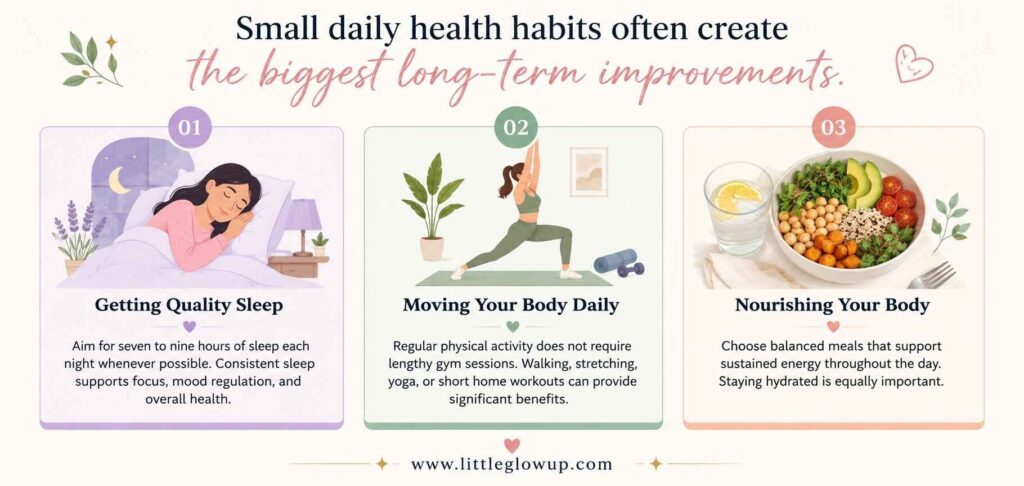
Your health plays a major role in achieving lasting work-life balance for women. Without energy and good health, managing work and personal responsibilities becomes far more difficult.
These simple wellness tips for busy women can make a significant difference:
- Aim for 7–9 hours of quality sleep.
- Drink enough water throughout the day.
- Include movement in your daily routine.
- Eat balanced meals that support steady energy.
Small daily improvements often produce powerful long-term results. Prioritizing your physical wellness strengthens your ability to maintain work-life balance for women even during stressful periods.
3. Learn How to Avoid Burnout Before It Starts
Many professional women wait until they feel completely exhausted before making changes. However, understanding how to avoid burnout as a working woman can help you stay healthier and more productive.
Watch for these warning signs:
- Constant fatigue
- Increased irritability
- Difficulty concentrating
- Feeling emotionally drained
- Lack of motivation
If you notice these symptoms, take action immediately. Schedule breaks, reduce unnecessary commitments, and give yourself permission to rest.
Remember, preventing burnout is one of the most important aspects of achieving sustainable work-life balance for women.
4. Create Healthy Habits That Support Your Goals
Successful women often rely on routines rather than motivation alone. Developing healthy habits for professional women helps create consistency and reduces daily stress.
Consider building habits such as:
- Planning your day the night before
- Taking regular movement breaks
- Practicing gratitude each morning
- Limiting unnecessary screen time
- Scheduling time for personal growth
Healthy routines help simplify decision-making and create more structure in your life. As a result, maintaining work-life balance for women becomes more manageable and sustainable.
5. Schedule Self-Care Like an Important Appointment
Many women place self-care at the bottom of their priority list. Unfortunately, this approach often leads to burnout and emotional exhaustion.
Effective self-care for working women does not need to be expensive or time-consuming.
Simple self-care ideas include:
- Reading for 15 minutes
- Taking a relaxing walk
- Journaling your thoughts
- Practicing meditation
- Enjoying a hobby you love
- Spending quality time with friends

Treating self-care as a non-negotiable part of your schedule helps support long-term work-life balance for women and overall happiness.
Read more: The Best Self-Care Ideas Every Busy Woman Should Try
6. Stop Trying to Be Perfect
Perfectionism is one of the biggest obstacles to achieving work-life balance for women.
Many women feel pressure to excel in every area of life simultaneously. However, trying to do everything perfectly often creates unnecessary stress and disappointment.
Instead:
- Focus on progress rather than perfection.
- Celebrate small victories.
- Accept that some days will be more productive than others.
- Give yourself grace during challenging seasons.
When you release unrealistic expectations, you create more space for balance, peace, and personal growth.
7. Build a Support System You Can Rely On
No woman should feel like she must do everything alone. Strong support systems are essential for maintaining healthy work-life balance for women.
Your support network might include:
- Family members
- Friends
- Mentors
- Coworkers
- Professional coaches
- Community groups
Asking for help is not a sign of weakness. In fact, successful women often recognize that support is necessary for long-term success and well-being.
Building meaningful relationships can reduce stress, improve resilience, and make achieving work-life balance for women far more realistic.

Conclusion
Achieving work-life balance for women is not about perfectly dividing every hour of your day. Instead, it is about intentionally creating a lifestyle that supports your career, relationships, health, and personal happiness.
By setting boundaries, prioritizing wellness, learning how to avoid burnout, developing healthy habits, and making self-care a priority, women can create a life that feels both productive and fulfilling.
Remember, true success is not just about what you accomplish professionally. It is also about maintaining the energy, health, and happiness needed to enjoy the life you are working so hard to build.
Start with one small change today, and over time, those small changes can transform your entire life.
Read more: The Ultimate Guide to Investing for Women in Their 20s
Read more Mental health at work World Health Organization – Mental Health at Work