
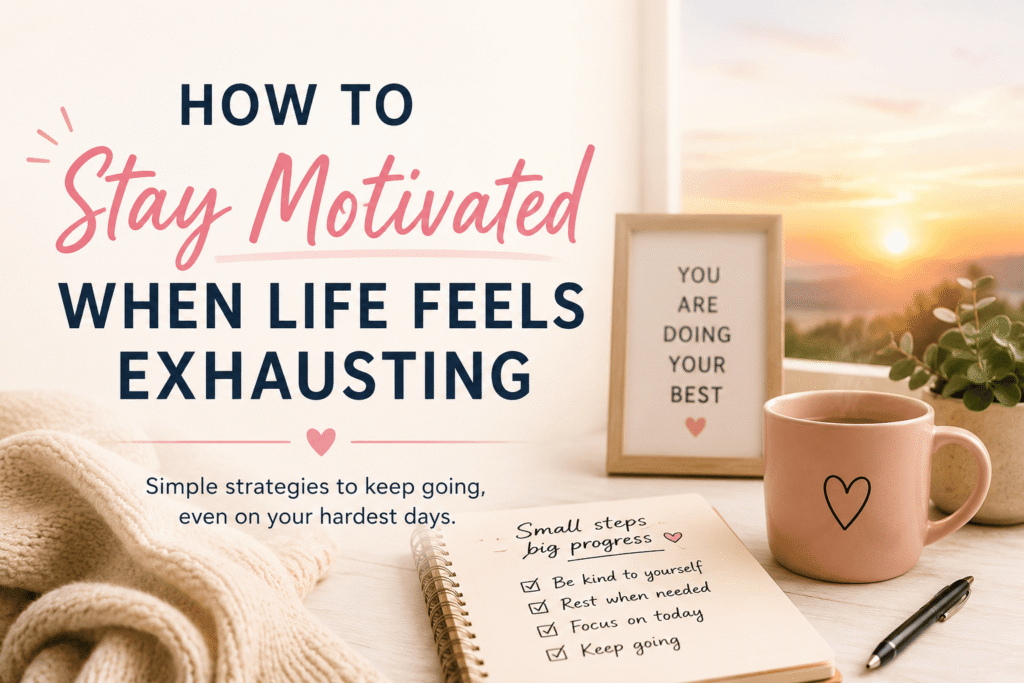
Life can feel overwhelming at times. Between work responsibilities, family commitments, personal goals, and unexpected challenges, it is easy to feel mentally and physically drained. During these periods, motivation often disappears, making even simple tasks feel difficult.
If you have been wondering how to stay motivated when life feels exhausting, you are not alone. Many people experience periods of low energy and reduced enthusiasm. The good news is that motivation is not something you either have or don’t have. It is something that can be nurtured through small, consistent actions.
This guide explores practical and realistic strategies to help you regain momentum, protect your energy, and continue moving forward even during difficult seasons.

Understanding Why Motivation Disappears
Before learning how to rebuild motivation, it is important to understand why it fades.
Exhaustion affects both the mind and body. When stress levels remain high for extended periods, your brain naturally prioritizes rest and recovery over productivity. This can lead to:
- Mental fatigue
- Reduced focus
- Increased procrastination
- Emotional overwhelm
- Lack of enthusiasm for goals
Recognizing that exhaustion is a normal human response—not a personal failure—can help you approach the situation with greater self-compassion.
Focus on One Small Step at a Time
When life feels exhausting, large goals can seem impossible.
Instead of focusing on everything you need to accomplish, identify one small action you can take today. Small wins create momentum and help rebuild confidence.
For example:
- Write one paragraph instead of an entire report.
- Take a 10-minute walk instead of committing to a full workout.
- Organize one section of your workspace rather than the whole room.
Progress, no matter how small, creates a sense of achievement that can reignite motivation.

Prioritize Rest Without Guilt
One of the biggest misconceptions about motivation is that pushing harder always produces better results.
In reality, exhaustion often signals that your body and mind need recovery. Proper rest can significantly improve focus, creativity, and emotional resilience.
Consider:
- Getting adequate sleep
- Taking short breaks throughout the day
- Spending time away from screens
- Practicing relaxation techniques
Rest is not the opposite of productivity. It is a necessary part of sustainable success.
Reconnect With Your Purpose
When energy is low, it becomes easy to forget why your goals matter.
Take a moment to reflect on your deeper reasons:
- Why did you start this journey?
- What positive changes are you working toward?
- How will achieving this goal improve your life?
A clear sense of purpose often provides motivation when emotions alone are not enough.
Stop Waiting for Perfect Motivation
Many people believe they must feel inspired before taking action.
However, action frequently comes before motivation.
Start with a simple task even if you do not feel ready. Completing one small action often creates the momentum needed to continue.
Successful people rarely wait for perfect conditions. They develop the habit of taking action despite temporary discomfort.
Celebrate Small Wins

When life feels exhausting, progress can seem invisible.
That is why celebrating small victories is important.
Examples include:
- Completing a difficult task
- Maintaining a healthy routine for a week
- Learning a new skill
- Taking positive action despite feeling tired
Acknowledging progress reinforces positive behaviors and encourages continued effort.
Read more about The Importance of Celebrating a Small Win When You Are Facing Hard Tasks With Zero Motivation
Reduce Unnecessary Pressure
Sometimes exhaustion comes from unrealistic expectations.
You do not have to be productive every minute of every day. Constant pressure can quickly lead to burnout.
Instead:
- Set realistic goals
- Focus on priorities
- Accept that some days will be more productive than others
Giving yourself permission to be human can significantly reduce stress and improve long-term motivation.
Surround Yourself With Positive Influences
The people and content you consume affect your mindset.
When motivation is low, seek supportive influences such as:
- Encouraging friends and family
- Inspiring books and podcasts
- Educational content
- Positive online communities
Positive environments can help shift your perspective and provide encouragement during difficult periods.
Create a Simple Daily Routine
Decision fatigue often increases when life feels chaotic.
A simple routine can reduce mental effort and help maintain consistency.
Consider including:
- A regular wake-up time
- A short morning routine
- Scheduled work periods
- Physical activity
- Evening relaxation
Even basic routines create structure and make it easier to stay productive when motivation fluctuates.
How to Stay Motivated to Practice Self-Compassion
Many people respond to exhaustion with self-criticism.
Unfortunately, harsh self-talk often makes motivation worse.
Instead, treat yourself with the same kindness you would offer a friend facing similar challenges.
Remember:
- Everyone experiences difficult seasons.
- Progress is rarely linear.
- Temporary setbacks do not define your future success.
Self-compassion creates a healthier mindset and helps you recover more quickly from challenges.
Read more Inspiring Women in American History
Final Thoughts
Learning how to stay motivated when life feels exhausting is not about forcing yourself to work harder. It is about managing your energy wisely, focusing on small steps, and maintaining perspective during difficult times.
Motivation naturally rises and falls throughout life. What matters most is your ability to keep moving forward, even when progress feels slow.
By prioritizing rest, reconnecting with your purpose, celebrating small wins, and practicing self-compassion, you can build sustainable motivation that supports both your goals and your well-being.
Remember: you do not need to make massive progress today. One small step forward is enough to keep the “how to stay motivated” journey moving.
Read more about How to Build a Positive Mindset and Stop Negative Thinking